Vector
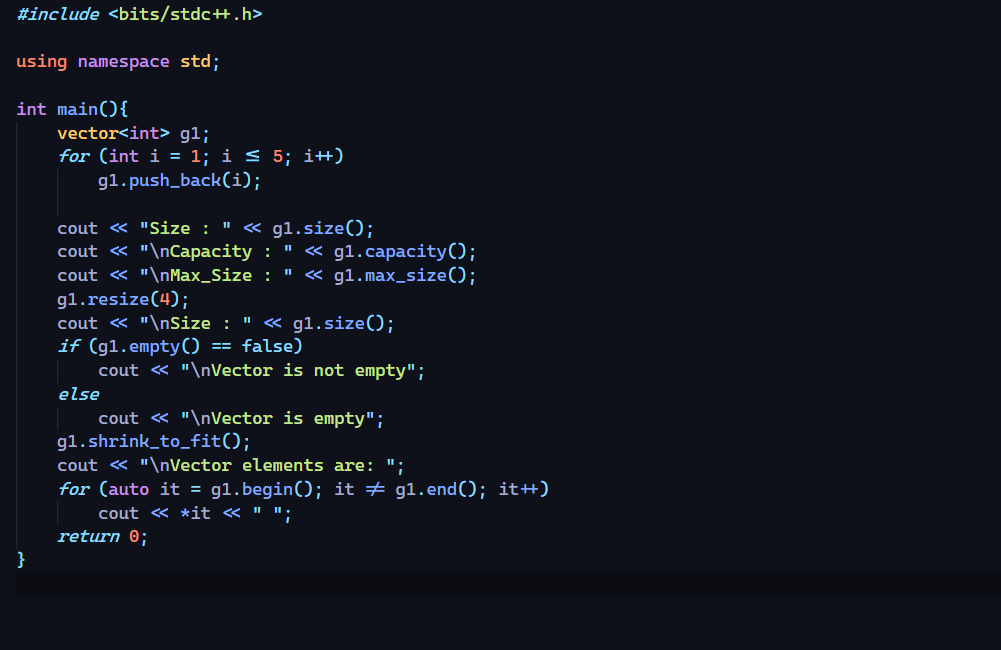
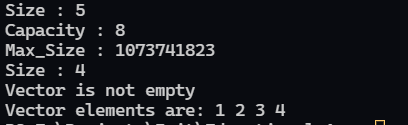
Vectors are same as dynamic arrays with the ability to resize itself automatically when an element is inserted or deleted, with their storage being handled automatically by the container. Vector elements are placed in contiguous storage so that they can be accessed and traversed using iterators. In vectors, data is inserted at the end. Inserting at the end takes differential time, as sometimes there may be a need of extending the array. Removing the last element takes only constant time because no resizing happens. Inserting and erasing at the beginning or in the middle is linear in time.
Output
List
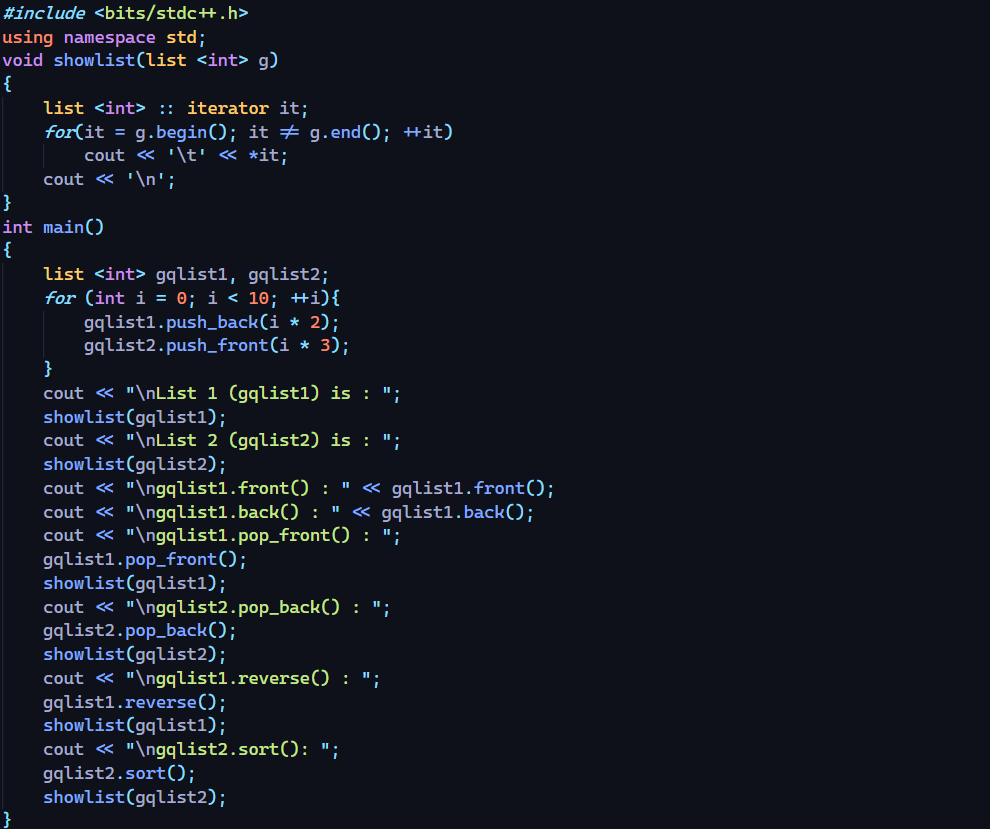
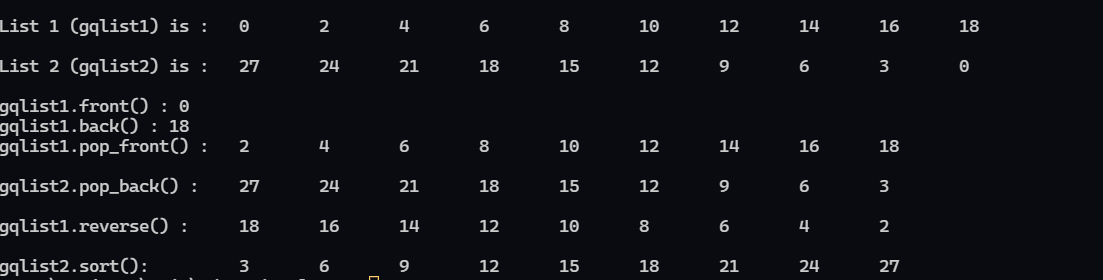
Lists are sequence containers that allow non-contiguous memory allocation. As compared to vector, list has slow traversal, but once a position has been found, insertion and deletion are quick. Normally, when we say a List, we talk about doubly linked list. For implementing a singly linked list, we use forward list.
Output
Pair
The pair container is a simple container defined in
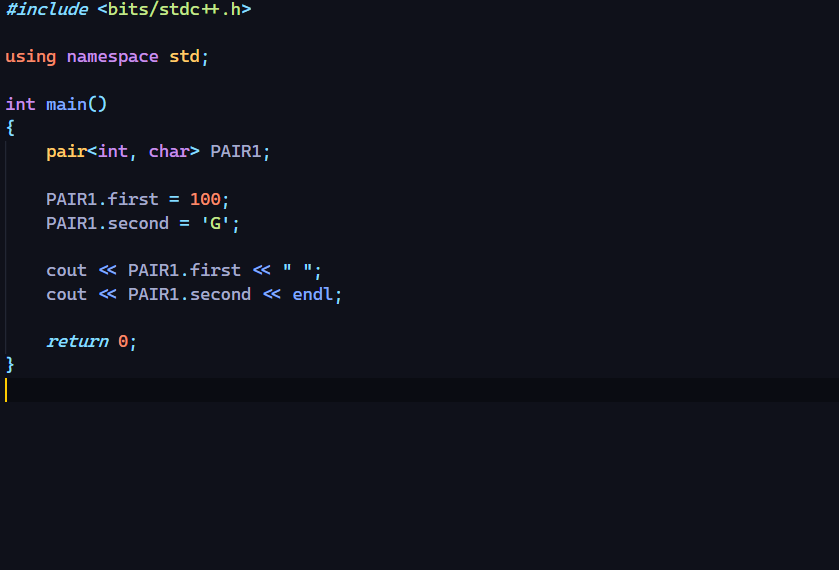
Output

Map
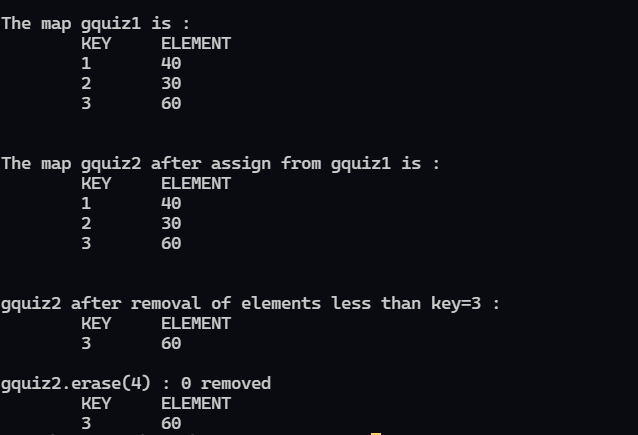
Maps are associative containers that store elements in a mapped fashion. Each element has a key value and a mapped value. No two mapped values can have same key values.
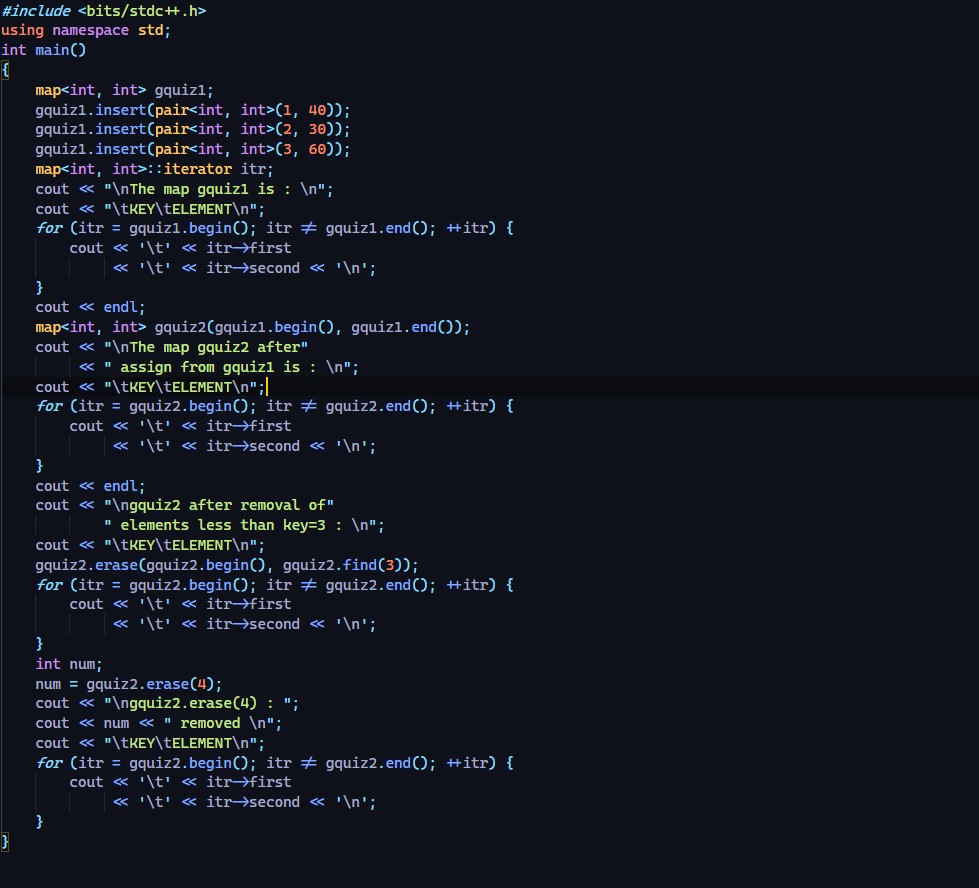
Output
Priority Queue
Priority queues are a type of container adapters, specifically designed such that the first element of the queue is the greatest of all elements in the queue and elements are in non increasing order (hence we can see that each element of the queue has a priority {fixed order}).
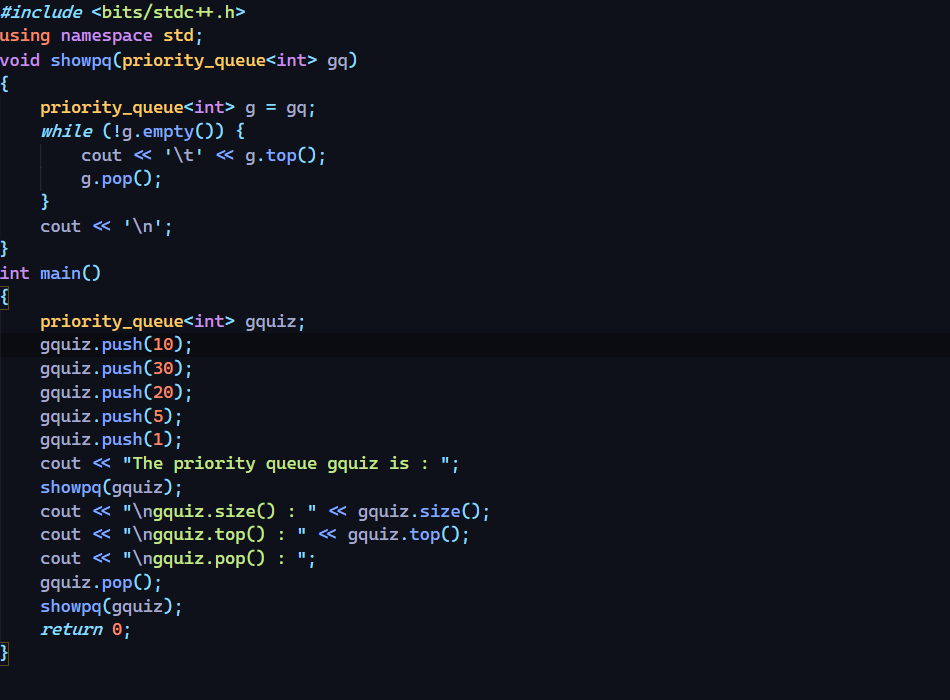
Output
